Most agencies use AI as a chat window. The bigger gains come from connected workflows. Here are three Claude automations we build for agencies, and what each one takes.
Most agency teams already use AI to draft an email or brainstorm headlines. That's useful, but it's still a person copying and pasting between tabs. The real time savings come when AI is connected to the tools you already use (your inbox, CRM, calendar, video recordings) and runs a workflow end to end, with a person approving the result.
These are the three automations agencies ask us about most, and we use versions of them in our own business. We build them with Claude because it handles long documents, writing quality and tool connections well, but the ideas apply to any capable AI model.
1. The content engine: one recording, a week of content
The problem: founders and subject experts know what to say but never have time to write it. Content stalls after a few weeks.
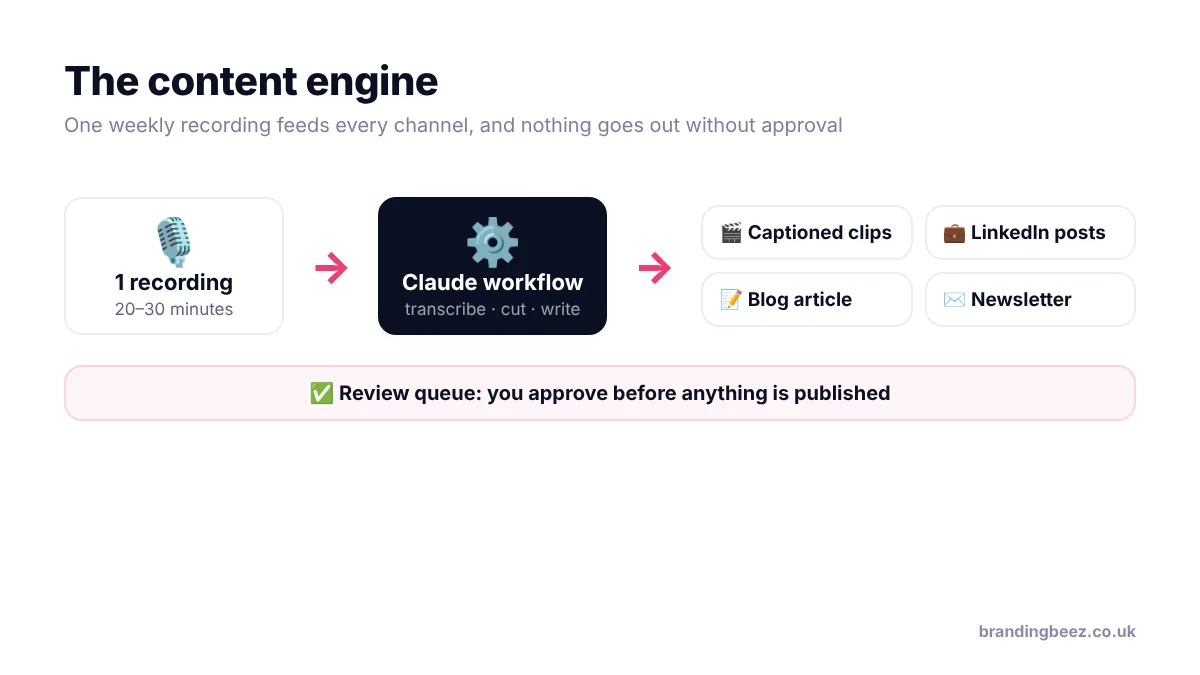
The automation: the expert records one 20–30 minute session a week, answering a short list of topics. The workflow transcribes it, cuts the best moments into short captioned clips, and drafts LinkedIn posts, a blog article and a newsletter in the expert's own voice. Everything lands in a review queue, and nothing is published without approval.
Why it works: the ideas and voice are real, and the hours of editing and writing disappear.
2. Lead follow-up that never forgets
The problem: leads go cold because nobody followed up. Webinar attendees, people who downloaded something and prospects who went quiet after a proposal all fall through the gaps.
The automation: every weekday, the workflow checks your inbox and CRM, finds leads who haven't replied or booked, and drafts a short, personal follow-up for each one. It references the last conversation, skips anyone already in a thread, and logs the touch in the CRM. A person reviews and sends the drafts in a few minutes.
Why it works: consistency. The follow-ups that win deals are usually the third or fourth, and those are exactly the ones people forget.
3. Meeting-to-content
The problem: your best material comes up in client calls and discovery meetings, and then disappears.
The automation: after a recorded call, the workflow drafts the follow-up email, pulls out the questions the client asked, and turns the insights into a blog post or LinkedIn post, with names removed unless you have permission. This article is an example: it came from questions agencies raised on our own calls.
Why it works: it captures expertise you're already producing, and keeps content tied to what real clients care about.
What it takes to build them
- Connections to your existing tools: email, CRM, calendar, video and social scheduling.
- Your voice and rules: examples of your writing, what to avoid, and who approves what.
- A review step: AI drafts, people approve. That keeps quality and accountability where they belong.
- Handover: documentation so your team can run and adjust it without us.
A first automation typically takes one to two weeks to build and tune. Our Claude automation setups start from £1,995 / $2,500, with optional monthly support. See our pricing.
Where to start
Pick the workflow where a missed task costs you the most money. For most agencies that's lead follow-up. For founder-led brands, it's the content engine.
Want one of these built for your agency, or white-labelled for your clients? Let's talk it through.
Talk to us about automationsReady to Get Started?
Contact our expert team to discuss how we can help grow your business with proven digital marketing strategies.