



Quick Summary
In 2026, many businesses are moving away from traditional agencies. Learn why white-label dedicated teams are becoming the preferred model for cost, speed, and control.
Table of Contents
Why White-Label Dedicated Teams Are Replacing Traditional Agencies in 2026
For years, traditional agencies were the default choice for businesses looking for marketing, development, or digital services. They offered packaged solutions, managed everything, and acted as a single point of contact.
In 2026, this model is changing. More businesses are choosing white-label dedicated teams instead of traditional agencies. The reason is simple: companies want better cost efficiency, faster execution, and more control over their work.
This shift is not about trends. It is about how modern businesses operate.
In 2026, this model is changing. More businesses are choosing white-label dedicated teams instead of traditional agencies. The reason is simple: companies want better cost efficiency, faster execution, and more control over their work.
This shift is not about trends. It is about how modern businesses operate.
What Are White-Label Dedicated Teams?
A white-label dedicated team is a group of skilled professionals who work exclusively on your projects but operate under your brand.
Instead of outsourcing work to an agency with multiple clients and layers, businesses get:
- A focused team
- Direct communication
- Full transparency
- Long-term collaboration
These teams feel like an extension of an internal team, without the cost of hiring full-time employees.
Instead of outsourcing work to an agency with multiple clients and layers, businesses get:
- A focused team
- Direct communication
- Full transparency
- Long-term collaboration
These teams feel like an extension of an internal team, without the cost of hiring full-time employees.
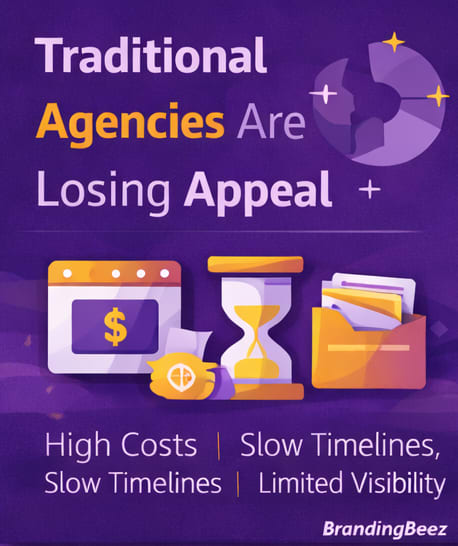
Why Traditional Agency Models Are Losing Appeal
Traditional agencies often follow rigid structures.
Common challenges include:
- High monthly retainers
- Limited flexibility
- Slow turnaround times
- Shared resources across many clients
- Little visibility into execution
As businesses grow faster and operate digitally, these limitations become harder to accept.
Common challenges include:
- High monthly retainers
- Limited flexibility
- Slow turnaround times
- Shared resources across many clients
- Little visibility into execution
As businesses grow faster and operate digitally, these limitations become harder to accept.

Cost Efficiency Is a Major Driver
Cost is one of the biggest reasons businesses move away from agencies.
With traditional agencies, you often pay for:
- Office overheads
- Account management layers
- Branding costs
- Fixed packages you may not fully use
Dedicated teams focus only on execution. Businesses pay for actual work, not structure. This makes budgeting more predictable and scalable.
With traditional agencies, you often pay for:
- Office overheads
- Account management layers
- Branding costs
- Fixed packages you may not fully use
Dedicated teams focus only on execution. Businesses pay for actual work, not structure. This makes budgeting more predictable and scalable.
Speed Matters More Than Ever
In 2026, speed is not optional. Markets change quickly, and delays can mean missed opportunities.
Dedicated teams move faster because:
- They work only on your priorities
- There are fewer approval layers
- Communication is direct
- Processes are tailored to your workflow
This speed advantage allows businesses to launch, test, and improve much faster than agency-led models.
Dedicated teams move faster because:
- They work only on your priorities
- There are fewer approval layers
- Communication is direct
- Processes are tailored to your workflow
This speed advantage allows businesses to launch, test, and improve much faster than agency-led models.
Control and Transparency Are Key
Modern businesses want to know:
- Who is working on their project
- What progress is being made
- How decisions are implemented
Dedicated teams provide full visibility. You can:
- Track daily or weekly progress
- Communicate directly with specialists
- Adjust priorities in real time
This level of control is difficult to achieve with traditional agencies that manage multiple clients simultaneously.
- Who is working on their project
- What progress is being made
- How decisions are implemented
Dedicated teams provide full visibility. You can:
- Track daily or weekly progress
- Communicate directly with specialists
- Adjust priorities in real time
This level of control is difficult to achieve with traditional agencies that manage multiple clients simultaneously.
Flexibility Supports Long-Term Growth
Agency contracts are often fixed and inflexible.
Dedicated teams offer:
- Easy scaling up or down
- Role-based team expansion
- Long-term collaboration
- Custom workflows
This flexibility helps businesses adapt without renegotiating contracts every few months.
Dedicated teams offer:
- Easy scaling up or down
- Role-based team expansion
- Long-term collaboration
- Custom workflows
This flexibility helps businesses adapt without renegotiating contracts every few months.
Quality Improves with Focus
When a team is dedicated to one business, quality naturally improves.
The team:
- Understands your brand deeply
- Learns your processes
- Builds domain knowledge over time
This leads to better outcomes compared to rotating agency staff. Many modern digital service providers, including those featured at Brandingbeez, highlight the value of focused execution and long-term team alignment.
The team:
- Understands your brand deeply
- Learns your processes
- Builds domain knowledge over time
This leads to better outcomes compared to rotating agency staff. Many modern digital service providers, including those featured at Brandingbeez, highlight the value of focused execution and long-term team alignment.
Risk Is Lower with Dedicated Teams
Traditional agencies often rely on internal handovers and changing team members.
Dedicated teams reduce risk by:
- Maintaining consistent personnel
- Preserving project knowledge
- Avoiding communication gaps
This stability is critical for complex or long-term projects.
Dedicated teams reduce risk by:
- Maintaining consistent personnel
- Preserving project knowledge
- Avoiding communication gaps
This stability is critical for complex or long-term projects.
Why This Shift Is Growing in 2026
The rise of remote work, global talent access, and digital collaboration tools has made dedicated teams easier to manage than ever before.
Businesses now prioritize:
- Efficiency over structure
- Results over presentation
- Ownership over outsourcing
White-label dedicated teams align perfectly with these priorities.
Businesses now prioritize:
- Efficiency over structure
- Results over presentation
- Ownership over outsourcing
White-label dedicated teams align perfectly with these priorities.
Frequently Asked Questions
What is a white-label dedicated team?
A white-label dedicated team is a group of professionals who work exclusively on your projects under your brand, acting as an extension of your internal team.
Why are businesses replacing traditional agencies?
Businesses want lower costs, faster execution, better control, and more transparency than traditional agencies typically offer.
Are dedicated teams only for large companies?
No. Small and mid-sized businesses also use dedicated teams to scale efficiently without hiring full-time staff.
Is quality better with dedicated teams?
Yes. Dedicated focus leads to deeper understanding, consistency, and higher quality outcomes.
Are dedicated teams secure and reliable?
When managed properly, they offer stable collaboration, clear processes, and long-term reliability.
Will agencies disappear completely?
No. Agencies still serve specific needs, but dedicated teams are becoming the preferred model for ongoing execution.
Ready to Get Started?
Contact our expert team to discuss how we can help grow your business with proven digital marketing strategies.